
Arietta.AI
Building an intelligent command center for water management teams to monitor ecosystems, coordinate fieldwork, and make data-driven decisions in real time.
Clarifying
Complexity
Water technicians and administrators needed a unified system to manage multiple bodies of water and team operations, but lacked a clear path from concept to execution.
Arietta.ai came to us with ambition but no roadmap. They had a conceptual idea but needed a working prototype to present to investors and secure buy-in for the full platform. They knew water management required sophisticated oversight—tracking water quality across dozens of sites, dispatching technicians, and documenting conditions—but their initial concept was a collection of features without hierarchy or flow. Our challenge was to transform their technical requirements into an intuitive, investor-ready system that served two distinct user types: field technicians who needed quick data entry and status updates, and administrators who required high-level oversight and team coordination. Without clarity on how these roles intersected, we risked building a dashboard that satisfied no one.
Our team initiated a discovery phase focused on understanding the roles of water technicians and administrators and their end goals. Through stakeholder interviews, we mapped the day-to-day realities of both personas—administrators juggling site priorities and resource allocation, technicians moving between locations needing efficient data capture. We developed user journey maps and user personas that visualized critical touchpoints and revealed friction points in their workflows. These artifacts became our foundation, showing that the dashboard needed to serve both strategic oversight and operational needs. With personas validated, we moved into wireframing, presenting weekly iterations to stakeholders to ensure our approach aligned with their technical constraints and budget while building toward a compelling prototype.
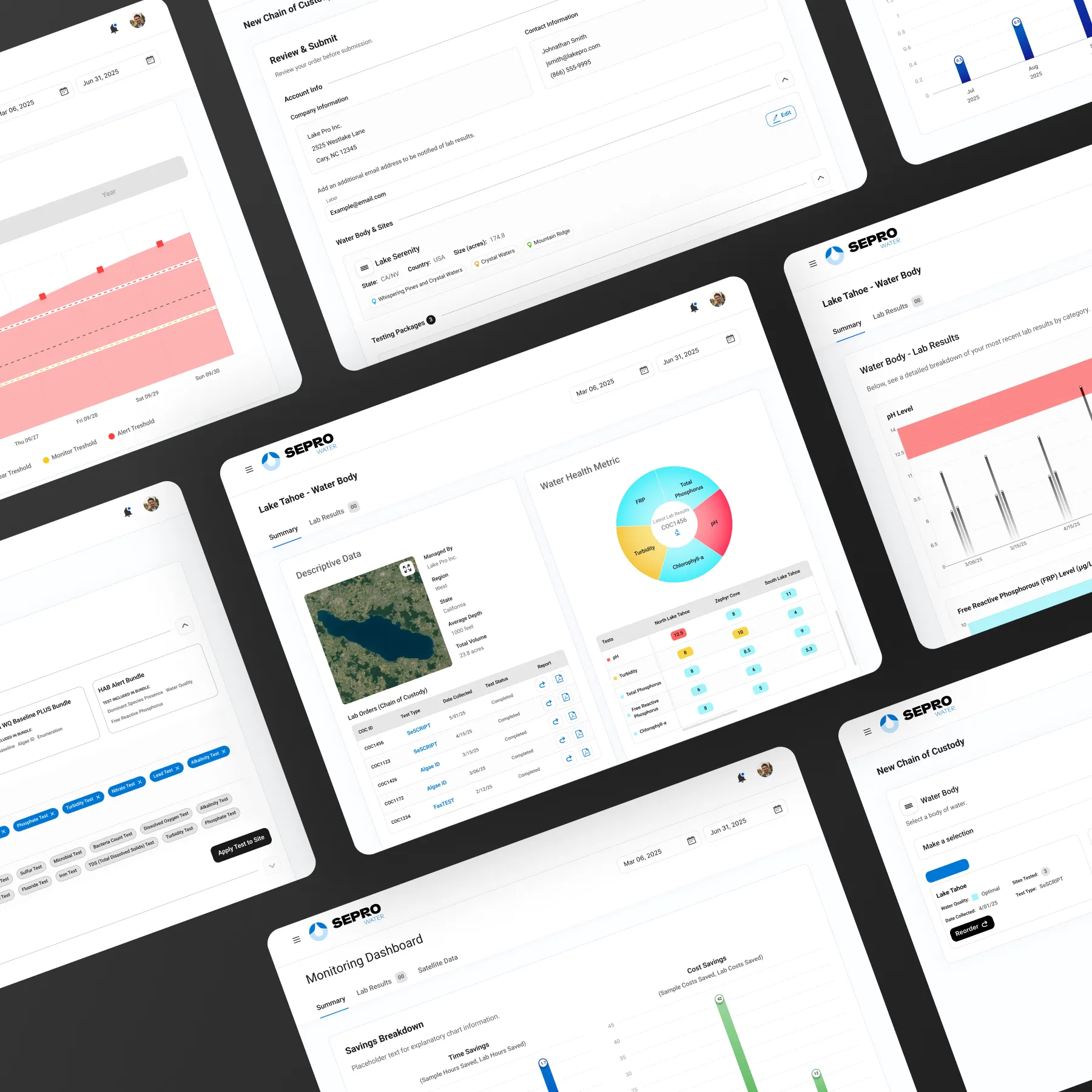
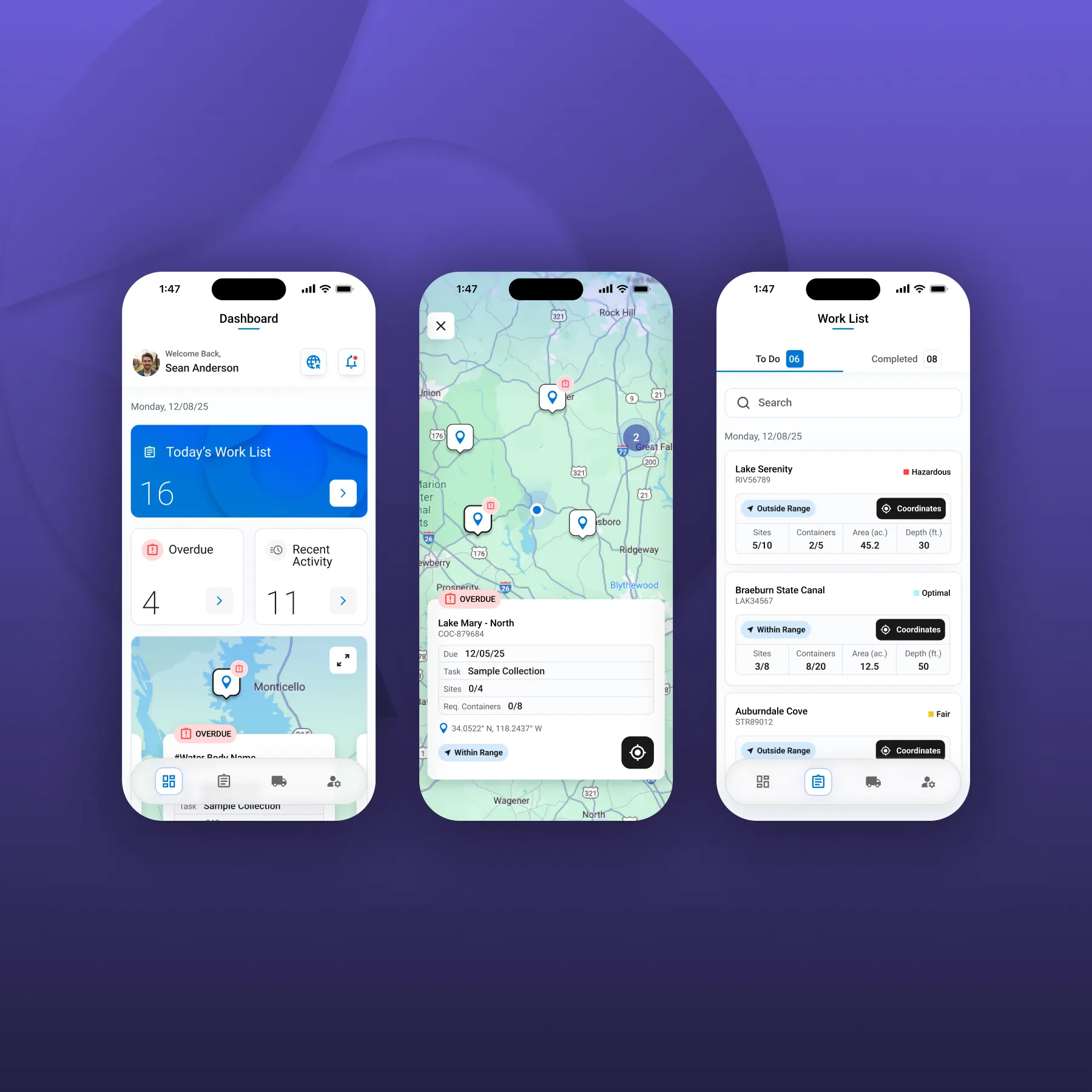
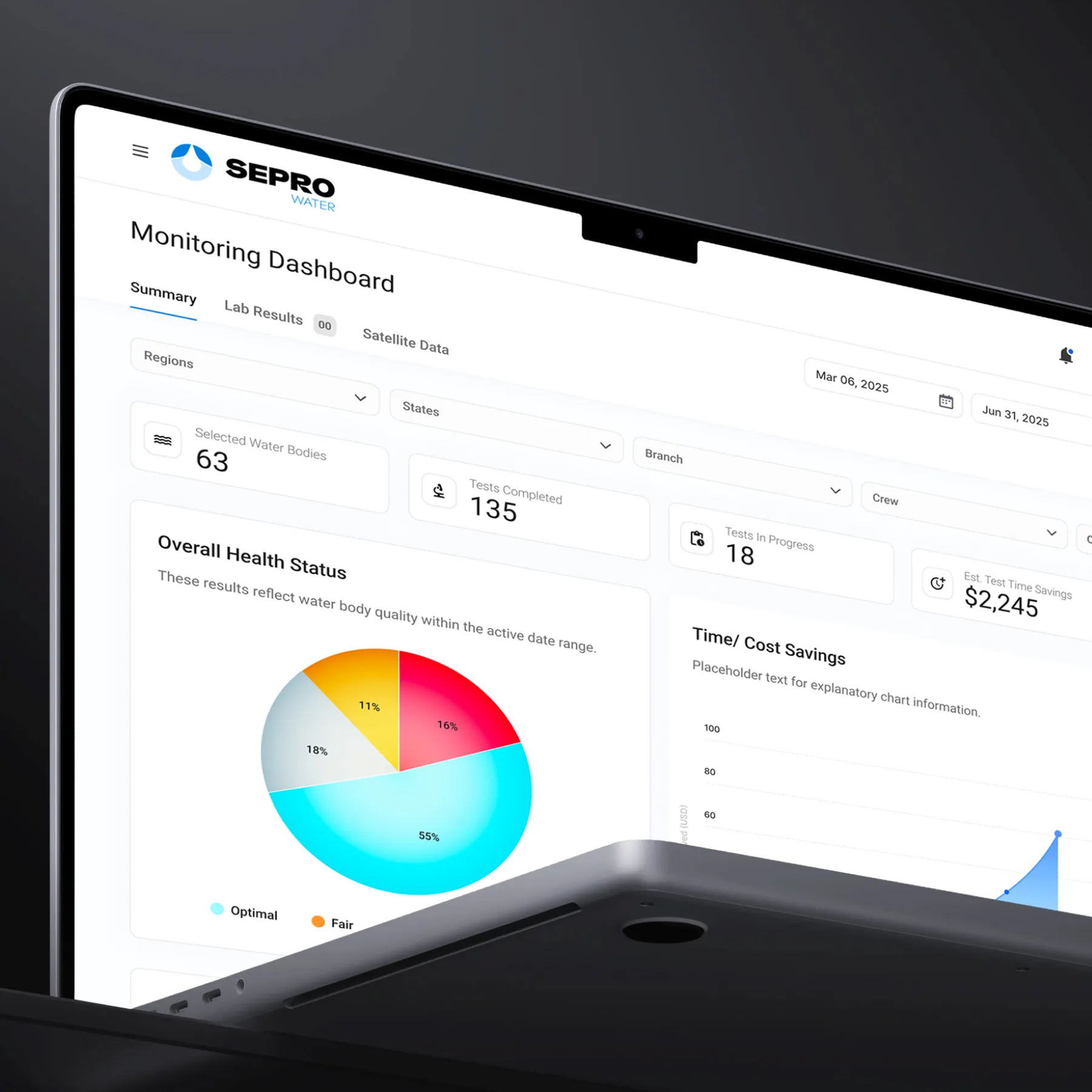
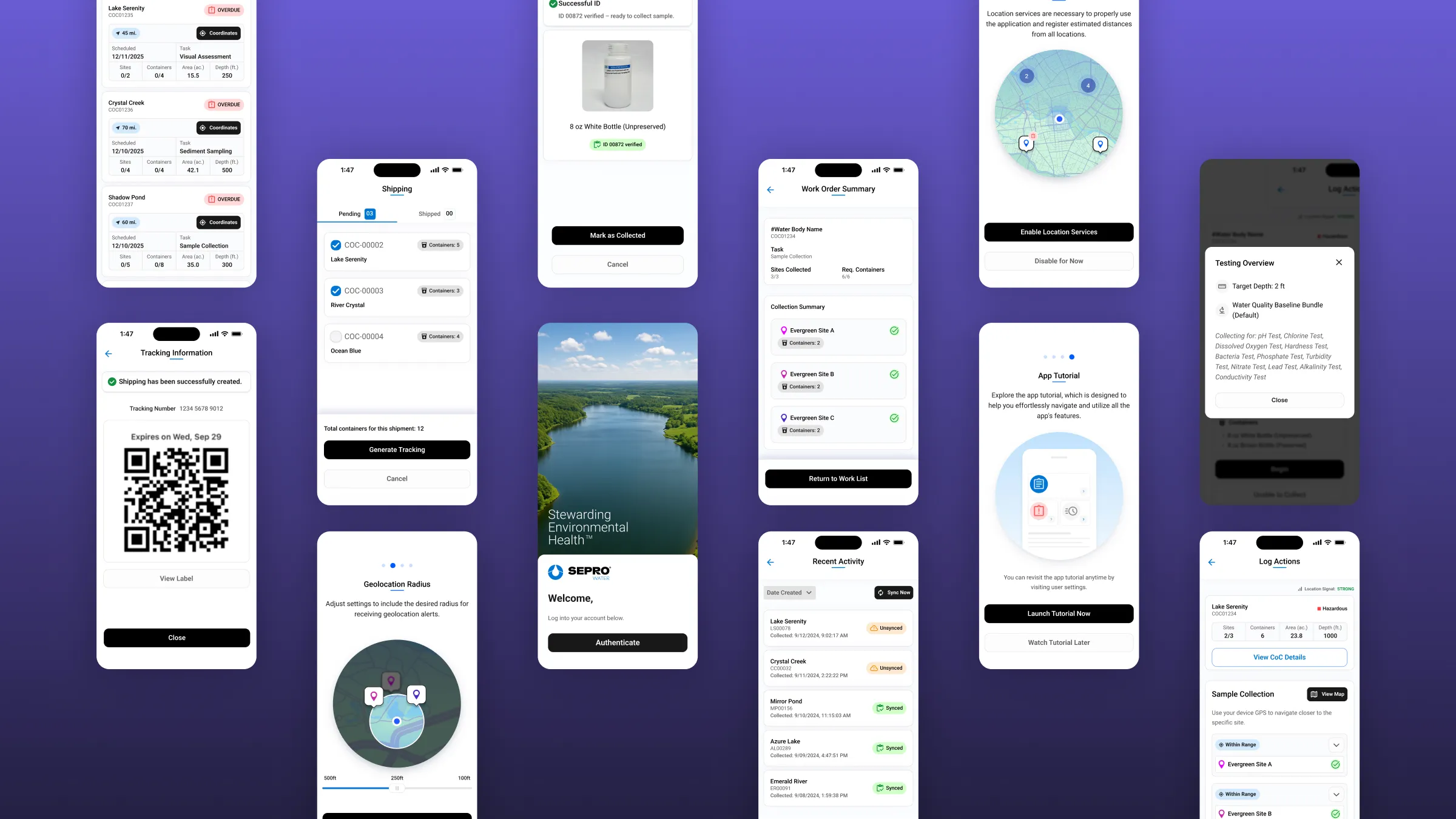
The final design balanced power with simplicity. We structured the information architecture around role-based dashboards—admins could monitor multiple water bodies and manage teams, while technicians had streamlined access to label water states and input field data. Our navigation system allowed users to move between sites and tasks without losing context. We established a robust design system with modular components that worked within their current dashboard while remaining scalable for future expansion. The prototype we delivered proved pivotal: when investors saw the working system, they immediately understood how it would improve business efficiency and reduce operational costs, leading to full investment approval. The impact extended beyond funding—Arietta.ai was so confident in our process that they extended our contract to design the companion mobile app for field technicians, validating that our user-centered approach delivered not just a product, but a platform for growth.