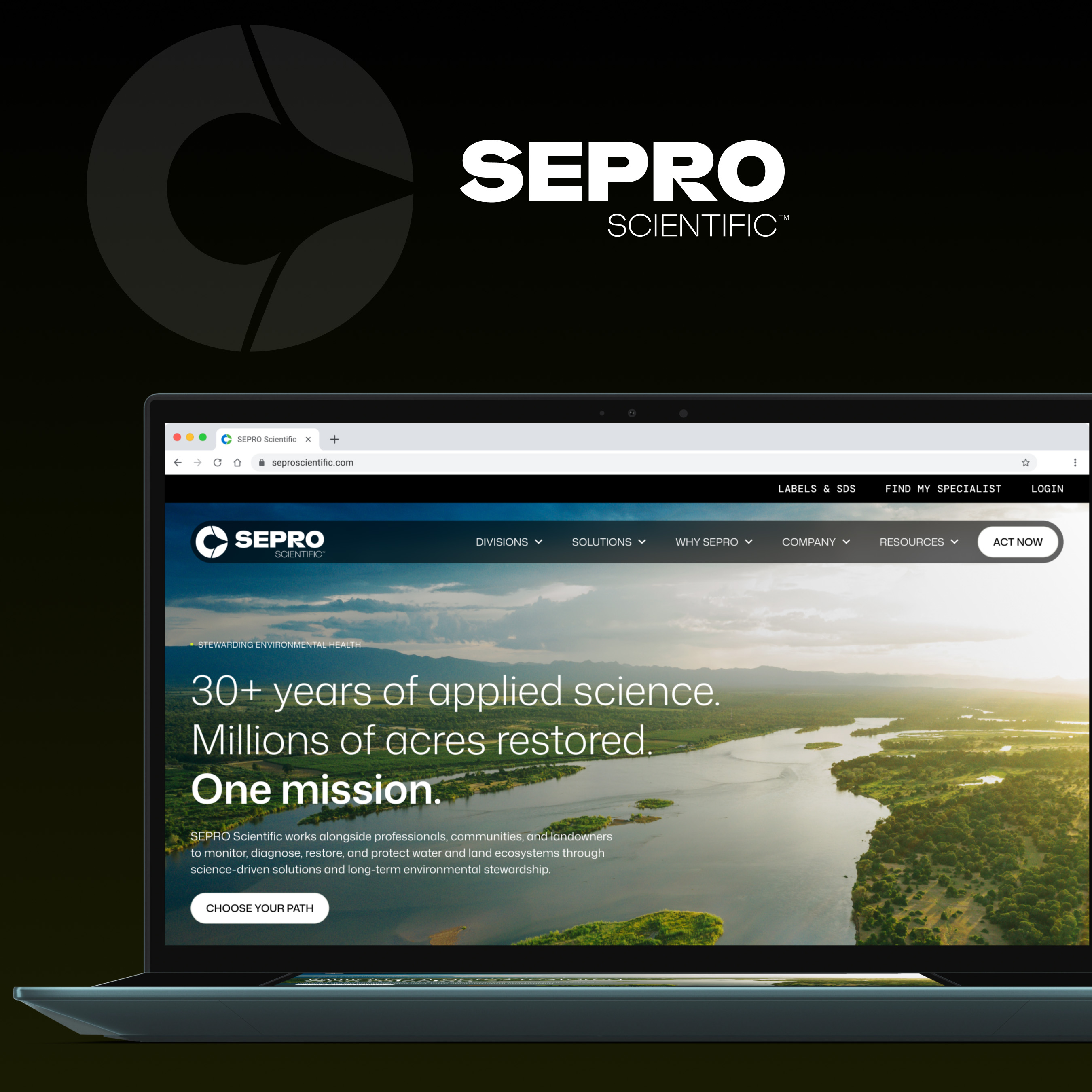

SEPRO Scientific Website Redesign
Transforming a fragmented multi-site ecosystem into a unified, science-forward platform that repositioned the company from product seller to trusted partner.
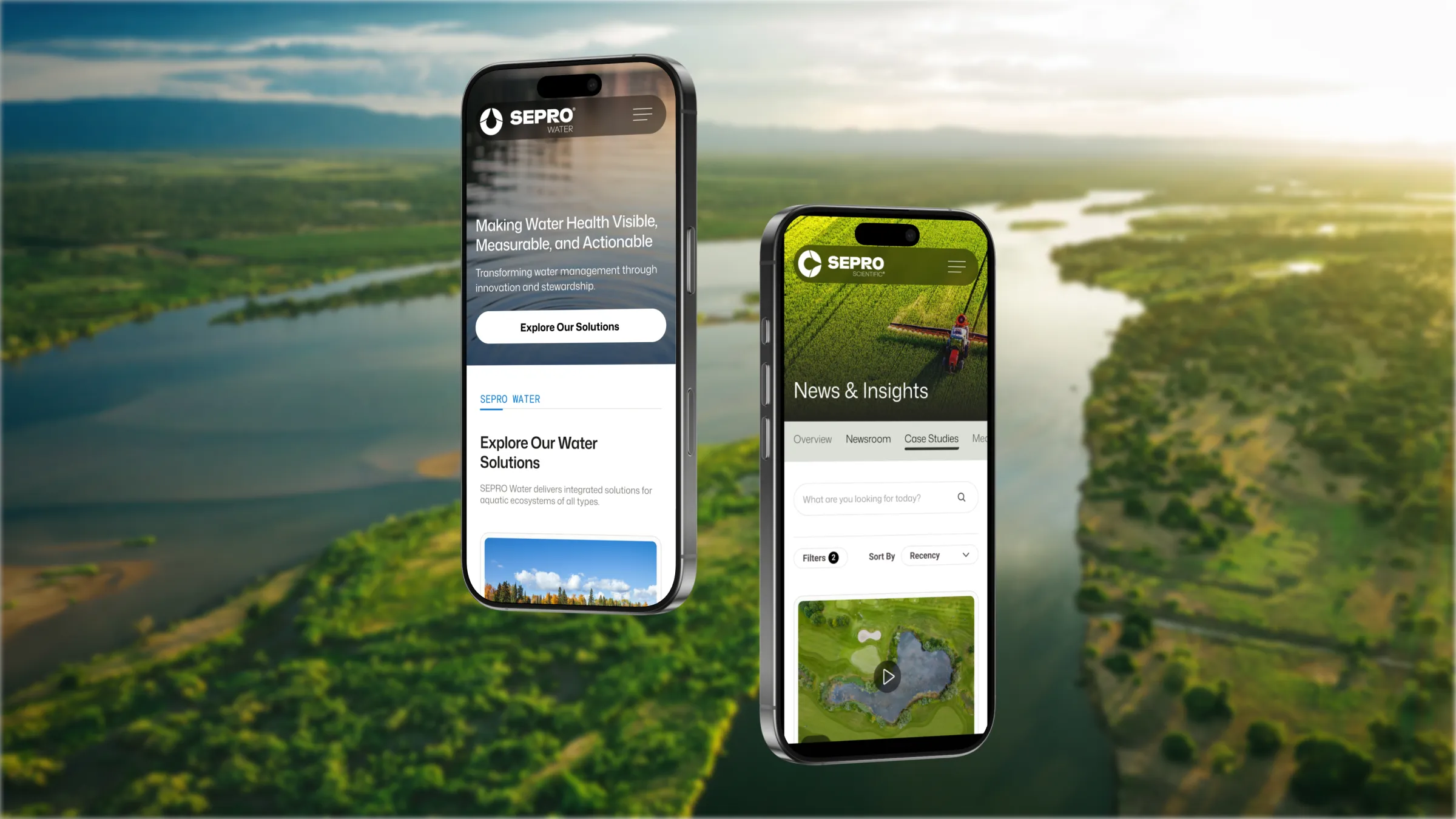
Consolidating
Complexity
Six disconnected websites were diluting brand identity and creating friction for users seeking comprehensive solutions across water and land restoration services.
SEPRO Scientific approached us with an ambitious three-month timeline to completely reimagine their digital presence. The challenge wasn't just aesthetic—it was structural. Their business had evolved organically across six separate domains (SEPRO Water, Lawn & Landscape, Agriculture, Golf, Ornamental, and Eutrophix), creating a disjointed user experience where clients couldn't easily discover the full scope of their capabilities. Our kickoff revealed a deeper strategic shift: they wanted to move away from being perceived as a transactional product company and establish themselves as a relationship-driven, science-led authority in restoration management.
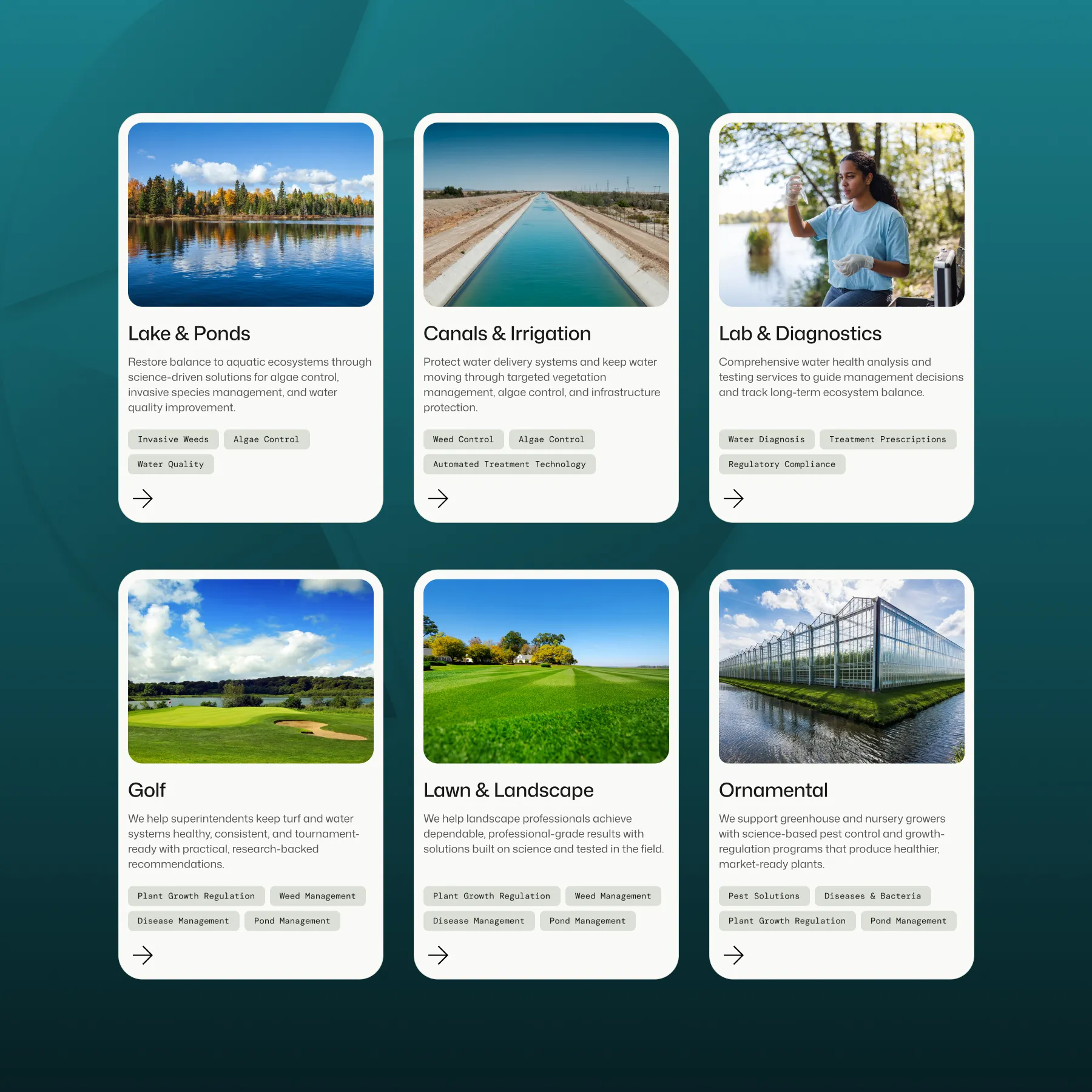
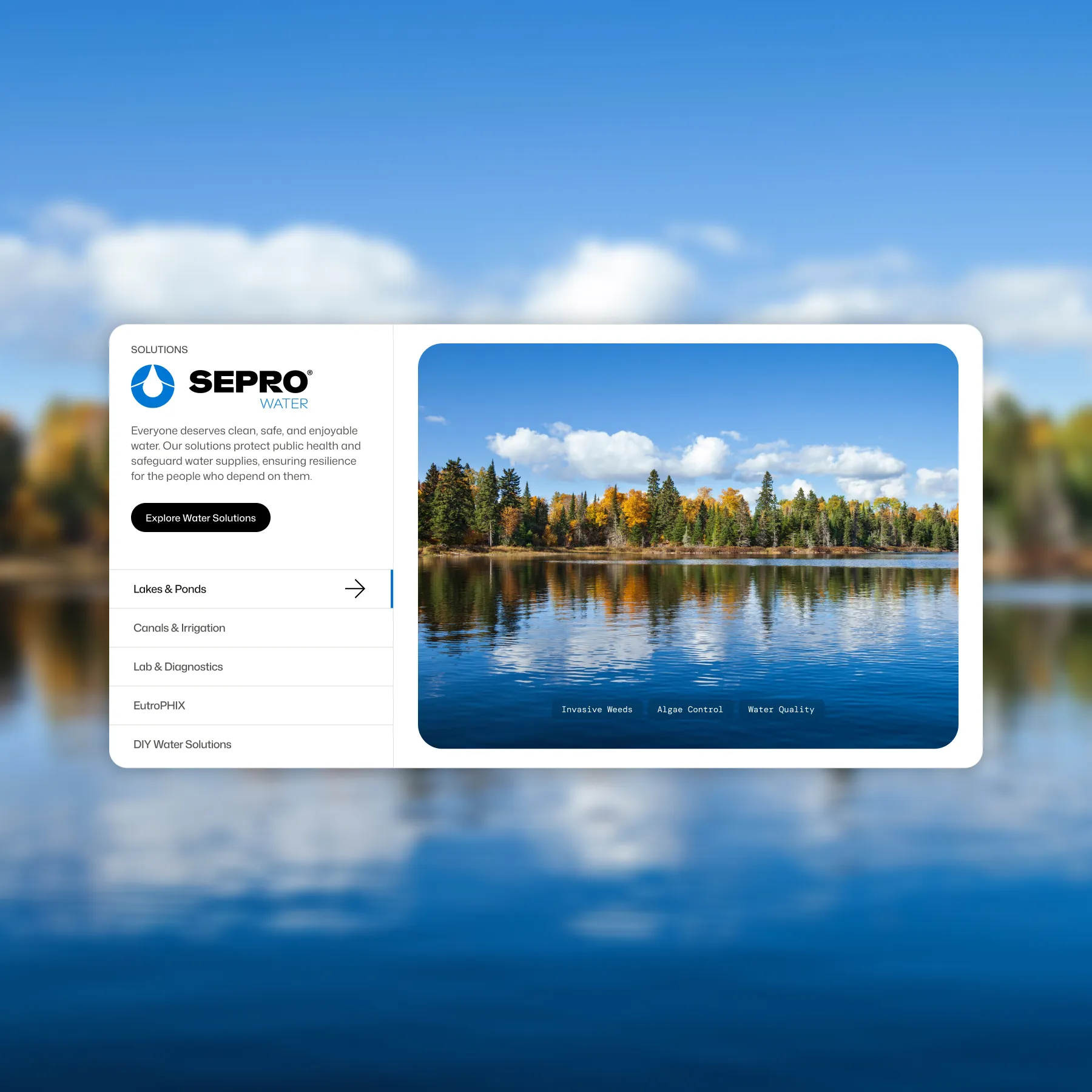
I led a comprehensive discovery phase spanning all six business segments, conducting stakeholder workshops and competitive analysis to understand overlapping services, distinct user needs, and content hierarchies. Using card sorting and affinity mapping with internal teams, we identified natural groupings that became the foundation for our information architecture. The breakthrough came when we proposed collapsing six sites into one unified hub with two primary pathways—SEPRO Water and SEPRO Land—allowing users to navigate by their specific challenge rather than guessing which legacy site held their solution. I created detailed sitemaps and user flows that mapped every page from the old structure to the new, ensuring no critical content or SEO equity was lost in the consolidation.
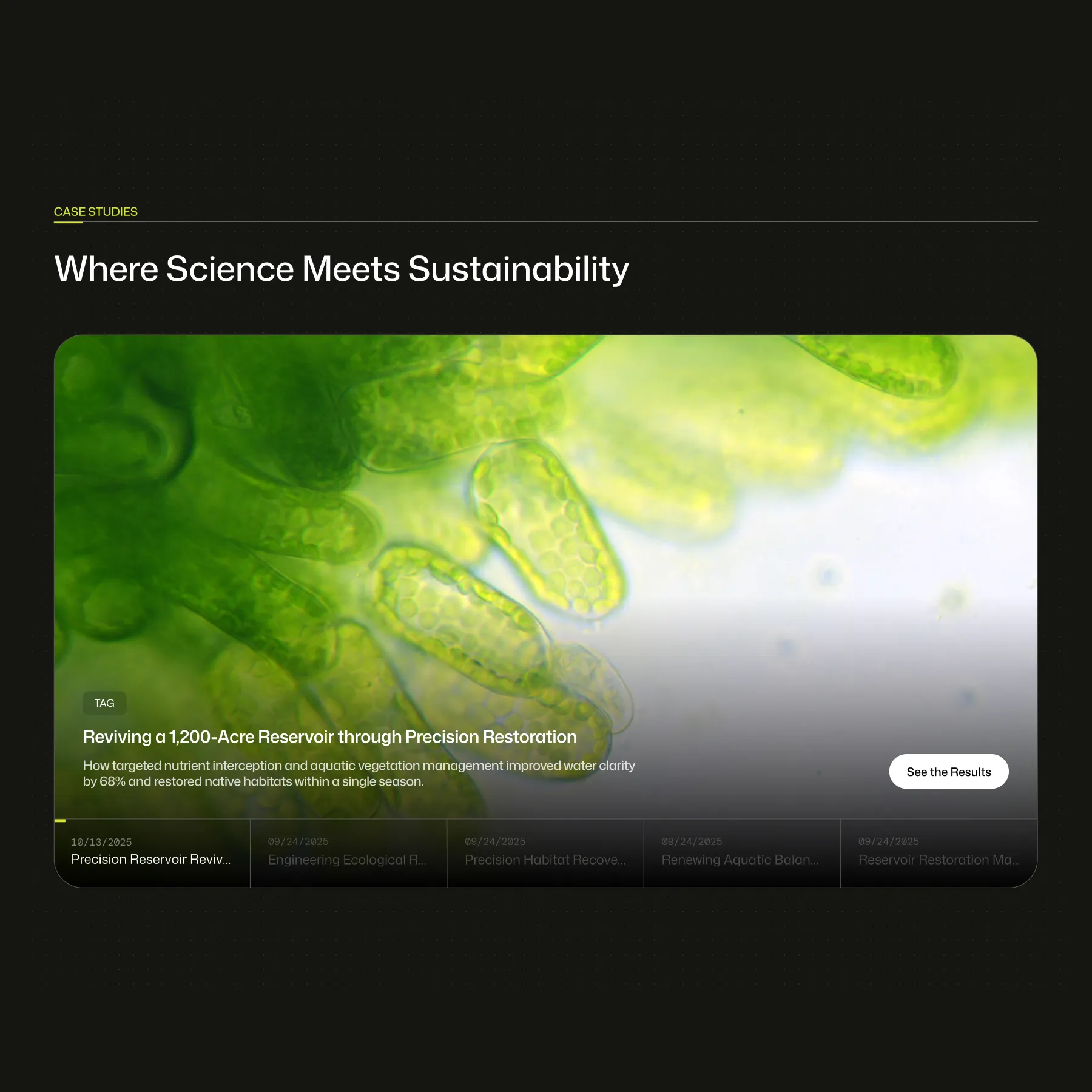
The navigation system became the backbone of the new experience. I designed a mega-menu structure with intelligent filtering that surfaced relevant solutions based on user context, whether they were managing a golf course or remediating a lake. This required building a flexible taxonomy and tagging system that the CMS could support long-term. Working within their new design system, I elevated the UI with clean typography, science-inspired data visualizations, and a restrained color palette that conveyed expertise and precision. Component libraries ensured consistency across hundreds of pages while giving stakeholders templates for future content. By implementing atomic design principles, we delivered a scalable system that positioned SEPRO as the credible, integrated partner they aspired to be—on time and ready for development handoff.